
Semi-Structured Data
Learn how Tacnode handles JSON, nested objects, and schema-flexible data without sacrificing query performance. This demo covers ingestion patterns, indexing strategies, and query optimization for semi-structured workloads.
Overview
Modern applications generate data that doesn't fit neatly into rigid schemas. Tacnode Context Lake's semi-structured data support lets you ingest JSON, handle schema evolution, and query deeply nested objects—all with the performance of a columnar database.
Topics Covered
- •JSON document storage and retrieval
- •Path expressions and nested field access
- •Schema inference and evolution handling
- •Indexing strategies for JSON fields
- •Flattening nested structures for analytics
Key Takeaways
- ✓Store JSON documents without predefined schemas
- ✓Query nested fields with SQL-like syntax
- ✓Handle schema changes without migrations
- ✓Achieve columnar performance on semi-structured data
Technical Highlights
- →JSON path support: Full JSONPath expression language
- →Indexing: Automatic path-based index recommendations
- →Compression: Type-aware compression for JSON fields
- →Query pushdown: Filter evaluation at storage layer
More Product Demos
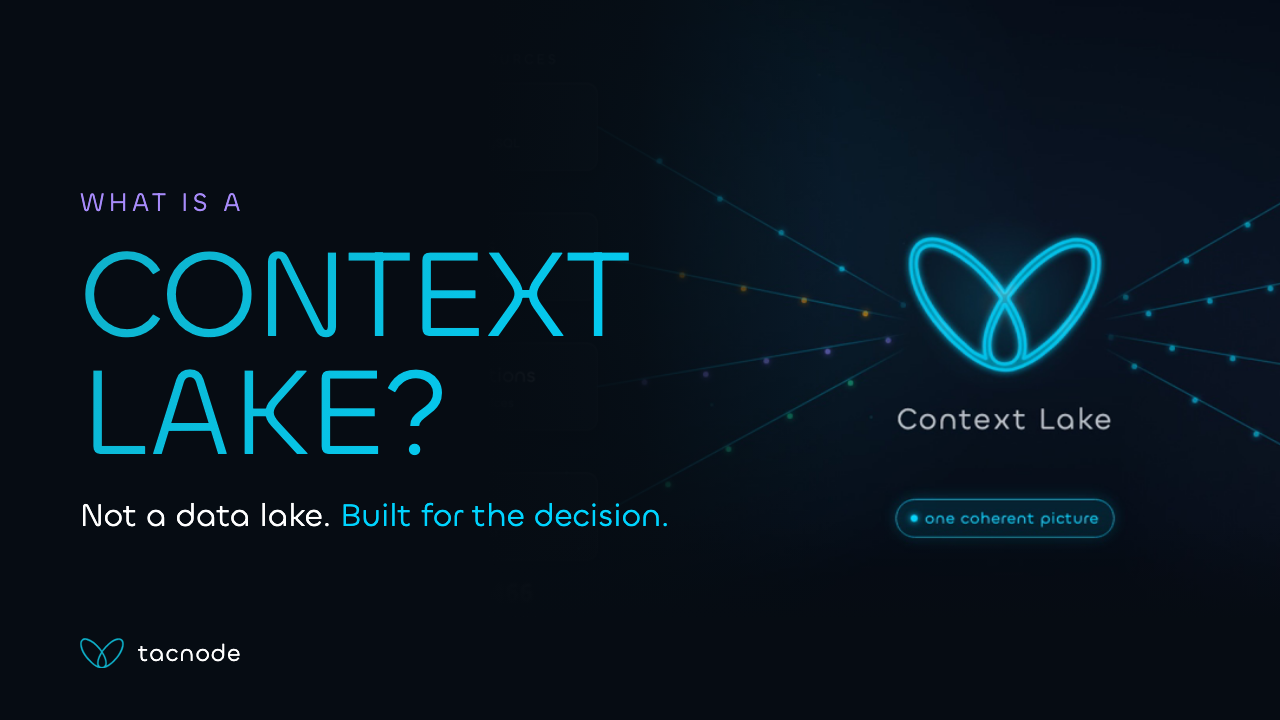
What Is a Context Lake? The Data Layer Behind Real-Time AI Decisions
A 3-minute explainer that builds the context lake as one diagram — where the data comes from, what it serves, and why the usual middle leaves decisions acting on a reality that has already moved.
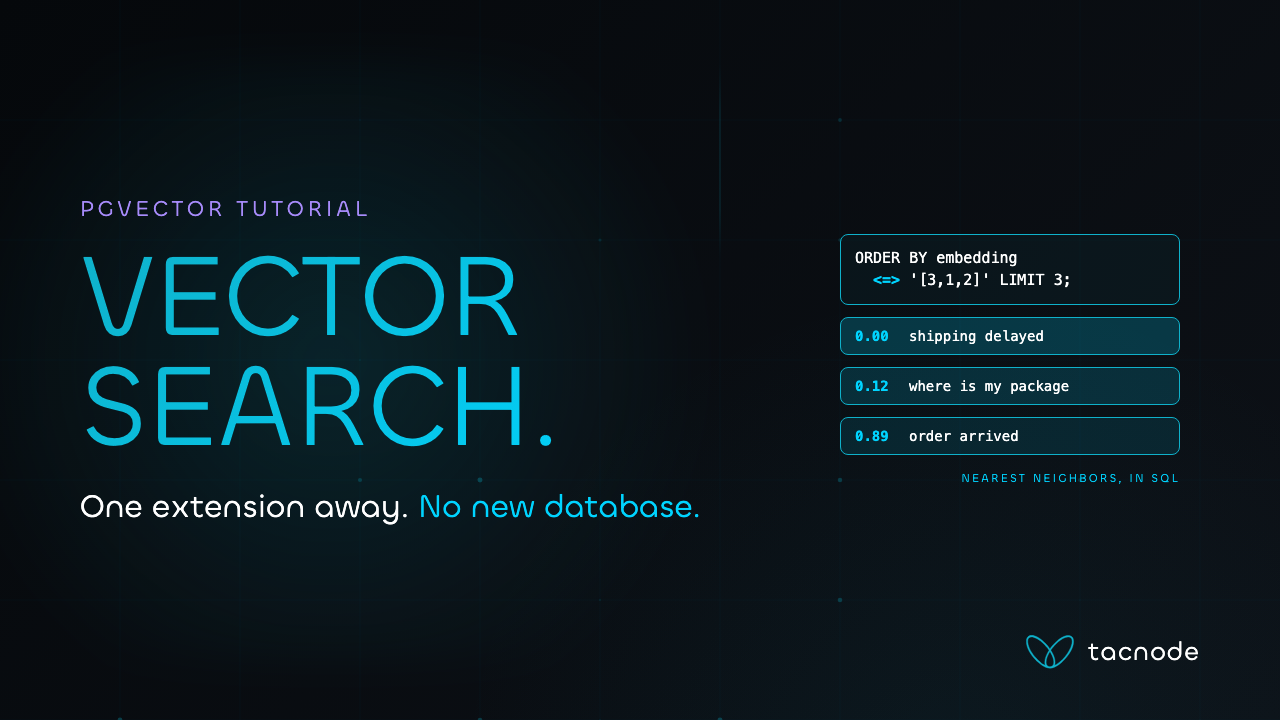
pgvector Tutorial: Vector Search in Postgres from Scratch
A 3-minute pgvector walkthrough — enable the extension, store embeddings, query nearest neighbors, and index with HNSW or IVFFlat, all in the Postgres you already run.
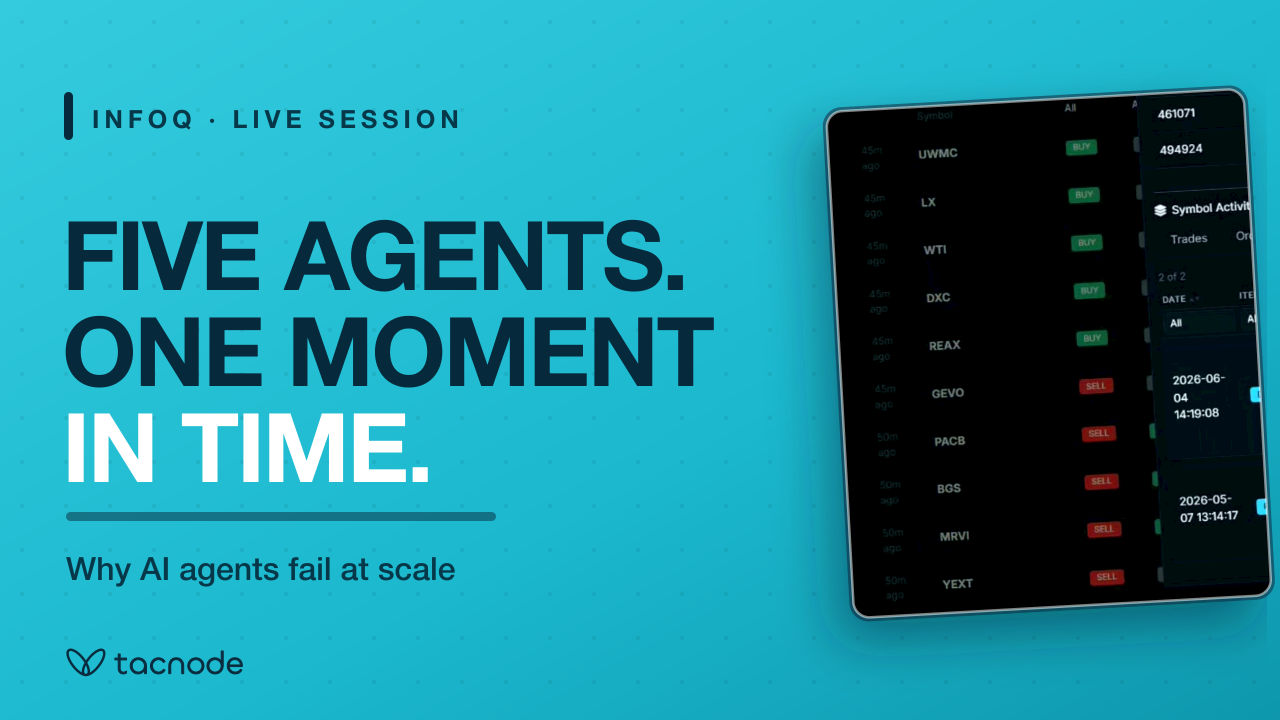
Why AI Agents Fail at Scale: Context Is a Data Layer Problem
A full InfoQ session on why agents that demo beautifully struggle in production — what "context" actually means, why agents read data differently than people, and what an agent-ready data layer has to do.
Ready to get started?
Book a demo to see how Tacnode can power your real-time data infrastructure.