
Transactions
Explore Tacnode's ACID-compliant distributed transaction model. This demo shows how to maintain consistency across complex operations while preserving the performance characteristics needed for real-time applications.
Overview
Distributed transactions are notoriously difficult to implement correctly. Tacnode provides full ACID semantics across distributed nodes without sacrificing the performance needed for real-time workloads.
Topics Covered
- •ACID properties in distributed systems
- •Two-phase commit and optimistic concurrency control
- •Isolation levels: Read Committed to Serializable
- •Conflict detection and resolution strategies
- •Transaction performance tuning
Key Takeaways
- ✓Run complex multi-table transactions with confidence
- ✓Avoid the pitfalls of eventual consistency in critical operations
- ✓Understand when to use different isolation levels
- ✓Design applications that leverage distributed transactions effectively
Technical Highlights
- →Commit latency: Millisecond cross-region transactions
- →Conflict resolution: Automatic retry with exponential backoff
- →Deadlock detection: Real-time cycle detection and resolution
- →Savepoints: Nested transaction support
More Product Demos
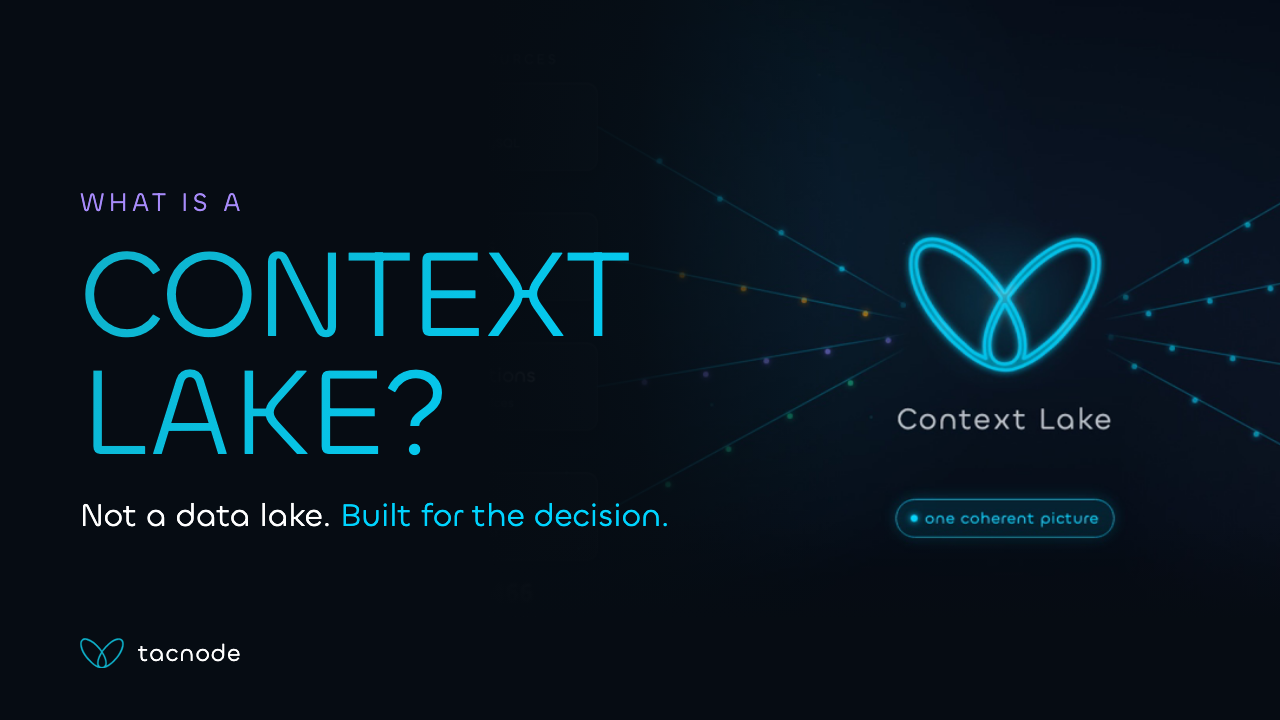
What Is a Context Lake? The Data Layer Behind Real-Time AI Decisions
A 3-minute explainer that builds the context lake as one diagram — where the data comes from, what it serves, and why the usual middle leaves decisions acting on a reality that has already moved.
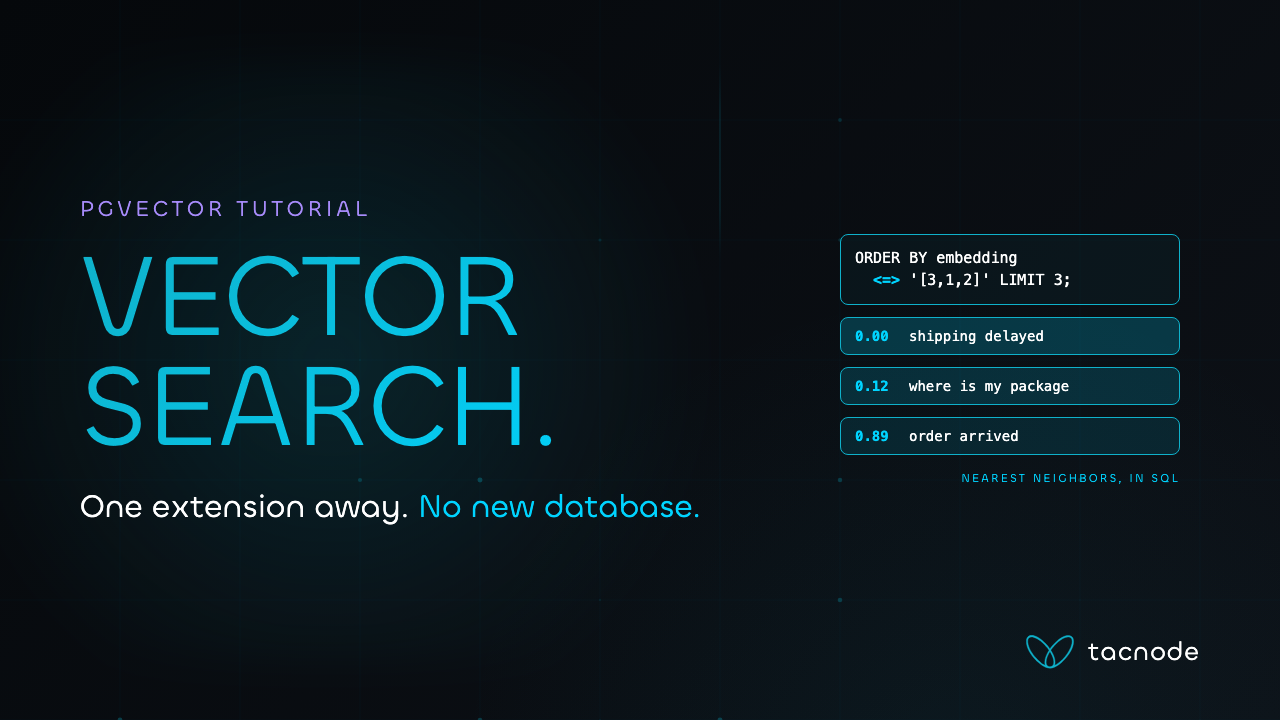
pgvector Tutorial: Vector Search in Postgres from Scratch
A 3-minute pgvector walkthrough — enable the extension, store embeddings, query nearest neighbors, and index with HNSW or IVFFlat, all in the Postgres you already run.
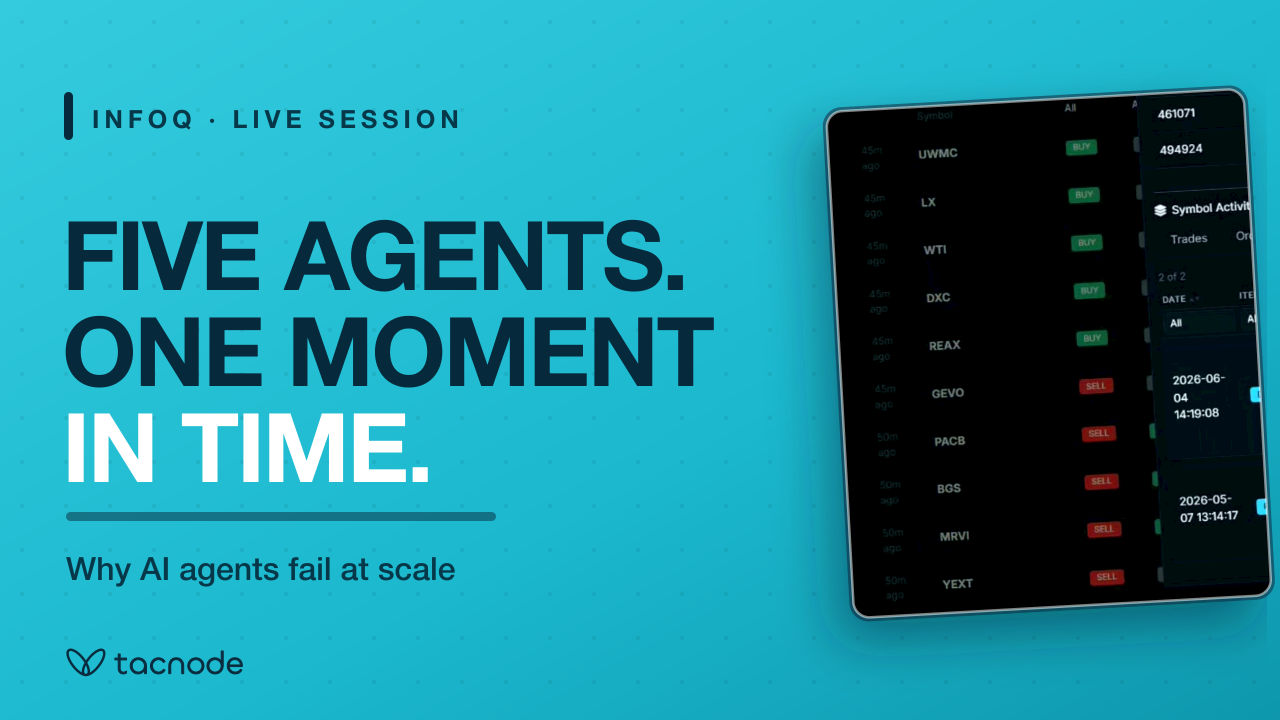
Why AI Agents Fail at Scale: Context Is a Data Layer Problem
A full InfoQ session on why agents that demo beautifully struggle in production — what "context" actually means, why agents read data differently than people, and what an agent-ready data layer has to do.
Ready to get started?
Book a demo to see how Tacnode can power your real-time data infrastructure.