
AI Agent Memory Explained: Types, Stores, and Stale State
Agent memory isn't one thing. Working memory, episodic history, semantic knowledge, and the plain state of right now (balances, limits, who's done what) usually live in different stores: a vector database for recall, a key-value cache for working memory, a SQL store for the facts. Each one is caught up to a different moment. For static recall, a vector store is the right tool. The problem is the memory the next action depends on: a balance that just changed, an action another agent just took. Retrieval finds what you stored; it can't tell you it's still true. This explainer walks through the kinds of memory, where the standard build drifts, and what fresh, coherent memory looks like.
Overview
A short explainer on AI agent memory: the four kinds of memory agents use, how the standard three-store build works, where a vector store is exactly the right tool, and why the memory the next action depends on has to be fresh and agree with itself.
Topics Covered
- •Working, episodic, semantic, and state memory
- •The standard build: a vector database, a key-value cache, and a SQL store
- •When a vector store is the right tool
- •Why retrieval can't tell you a memory is still true
- •Structured facts, derived signals, and semantic recall read under one snapshot
Key Takeaways
- ✓Each store in a stitched memory stack is caught up to a different moment
- ✓Static recall (the manual, the policy, last quarter's notes) is a retrieval job, and a vector store handles it well
- ✓The memory an agent acts on, like a balance or another agent's action, has to be current at the moment of the decision
- ✓Reading facts, derived signals, and recall together under one snapshot removes drift between the pieces
More Product Demos
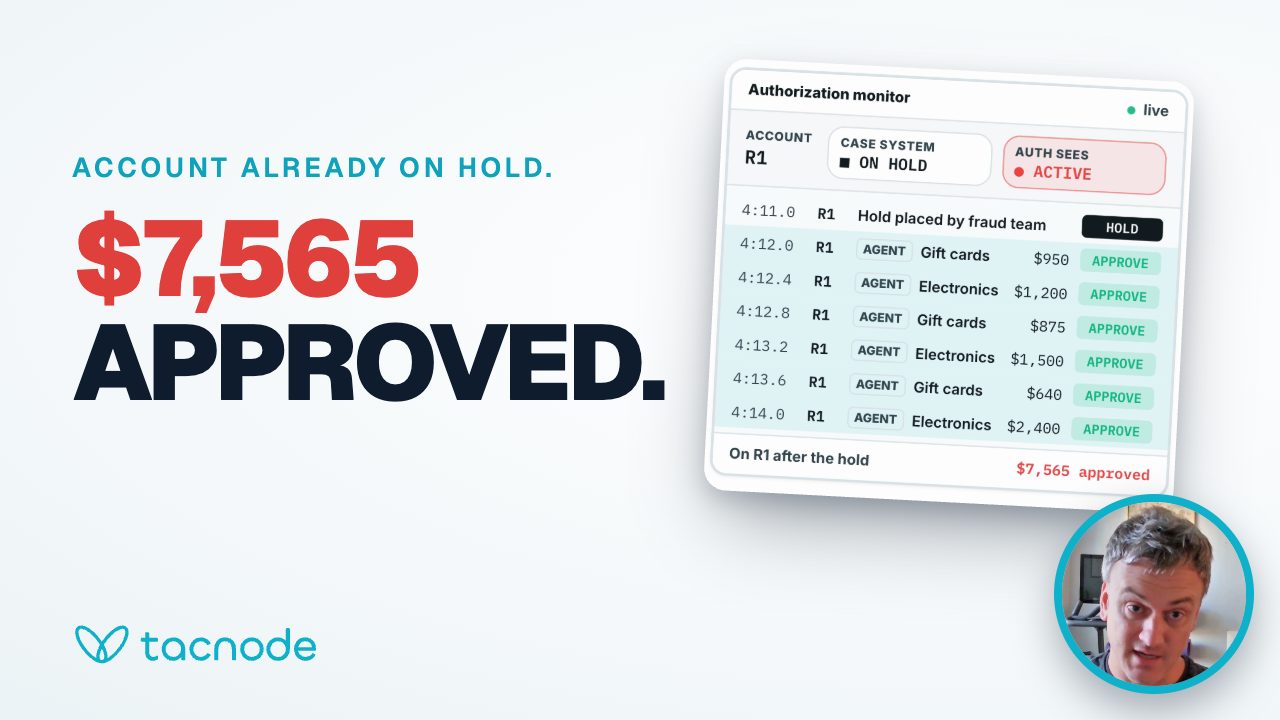
Card Fraud: Six Purchases Approved on an Account Already on Hold
A 4-minute walkthrough of a fraud hold placed in time that reaches card authorization eight seconds late, and the same hold with current context.
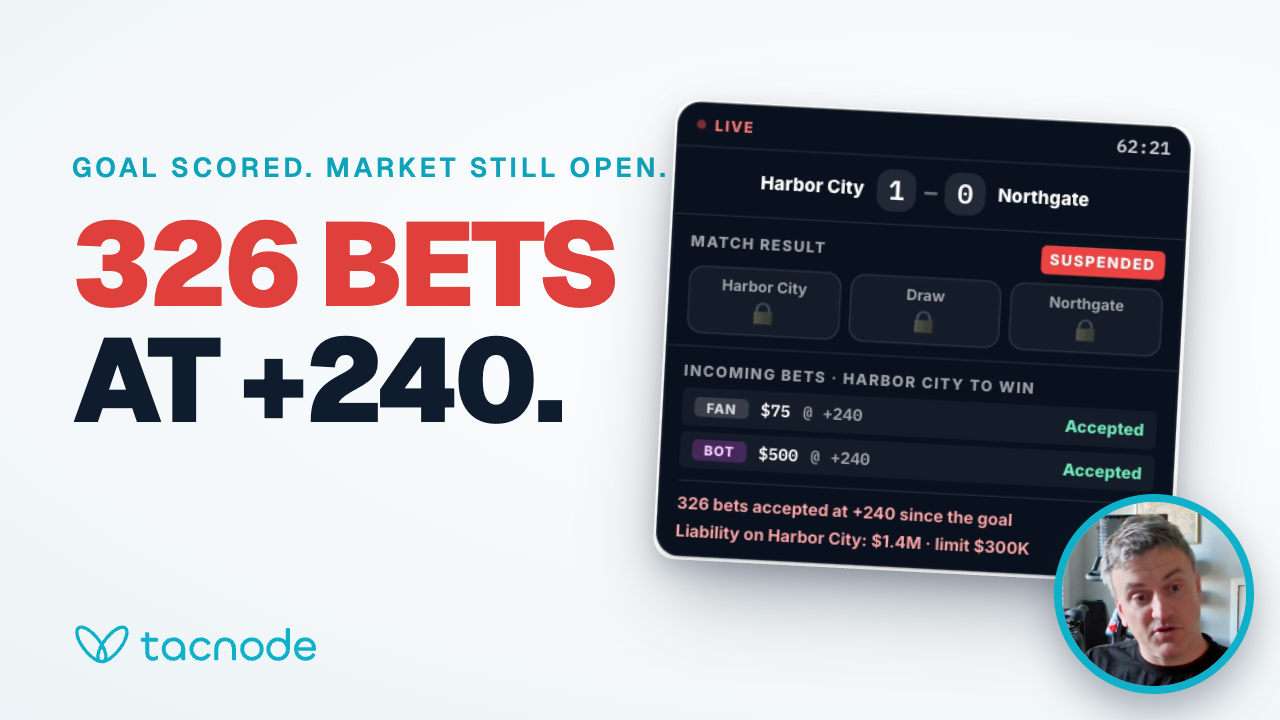
Past-Posting in Live Betting: Why Sportsbooks Keep Taking Bets After a Goal
A 4-minute walkthrough of a sportsbook that keeps taking bets for seven seconds after a goal, and the same goal with current context.
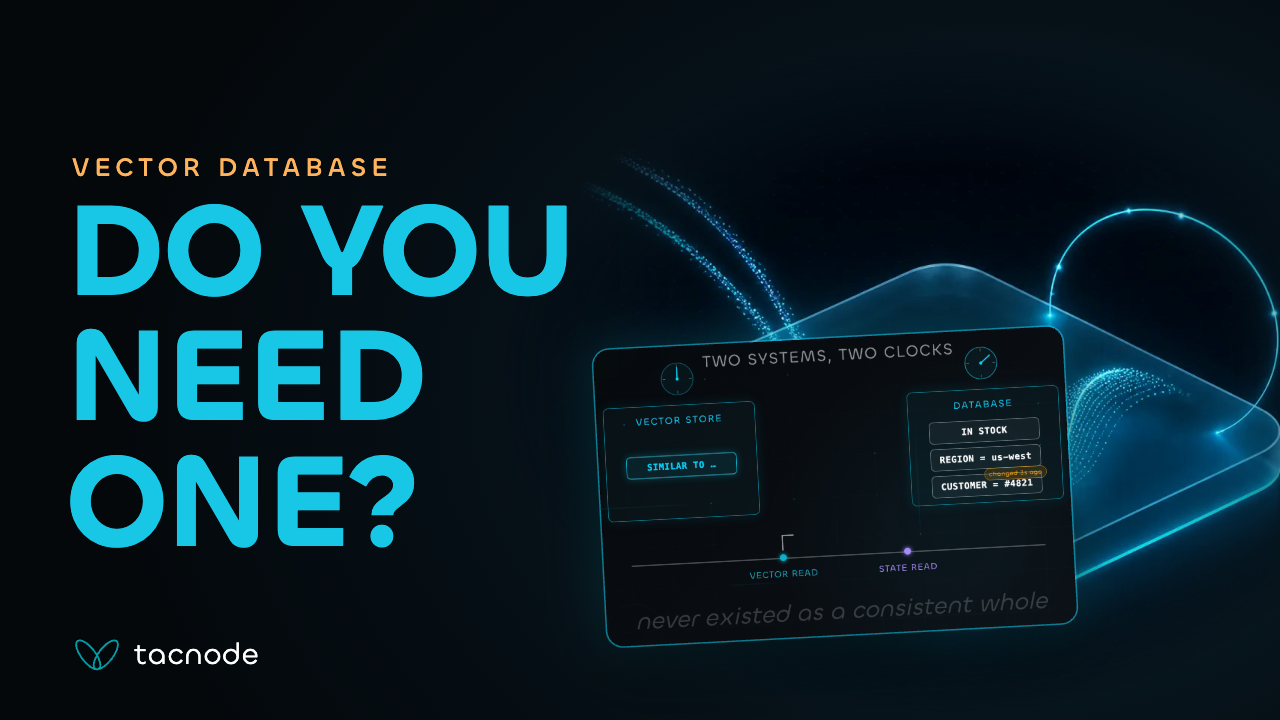
Do You Actually Need a Separate Vector Database?
A 3-minute explainer on when a separate vector database earns its place, and what changes when similarity search has to agree with live filters and state.
Ready to get started?
Book a demo to see how Tacnode can power your real-time data infrastructure.