
ACID for AI Agents: Why Agent Data Breaks at Decision Time
An AI agent approves a payment using a balance from one system, a risk score from another and a velocity counter from a third, each from a different moment. What agents read at decision time is usually derived state (counters, scores, aggregations, feature vectors), and most stacks compute it in pipelines outside the database, so it's behind by the time the agent reads it. This explainer contrasts two diagnoses, storage fragmentation and computation fragmentation, and argues that converging storage doesn't fix the lag. ACID for agents means ACID on the context the agent reads: derived state computed against the same set of ingested events and read under one snapshot, while source systems stay where they are.
Overview
A short explainer on ACID for agents: what agents actually read at decision time, why that derived state goes stale in pipelines, and why the fix is about computation rather than storage.
Topics Covered
- •One decision, three systems, three moments in time
- •What agents actually read: derived state
- •Why derived state goes stale in pipelines outside the database
- •Storage fragmentation vs. computation fragmentation
- •ACID on the context the agent reads
Key Takeaways
- ✓Agents mostly read derived state, not raw rows
- ✓Derived state computed in separate pipelines is behind by the time a decision reads it
- ✓Converging storage alone doesn't remove that lag
- ✓Context computed against the same ingested events and read under one snapshot gives a decision one consistent picture
More Product Demos
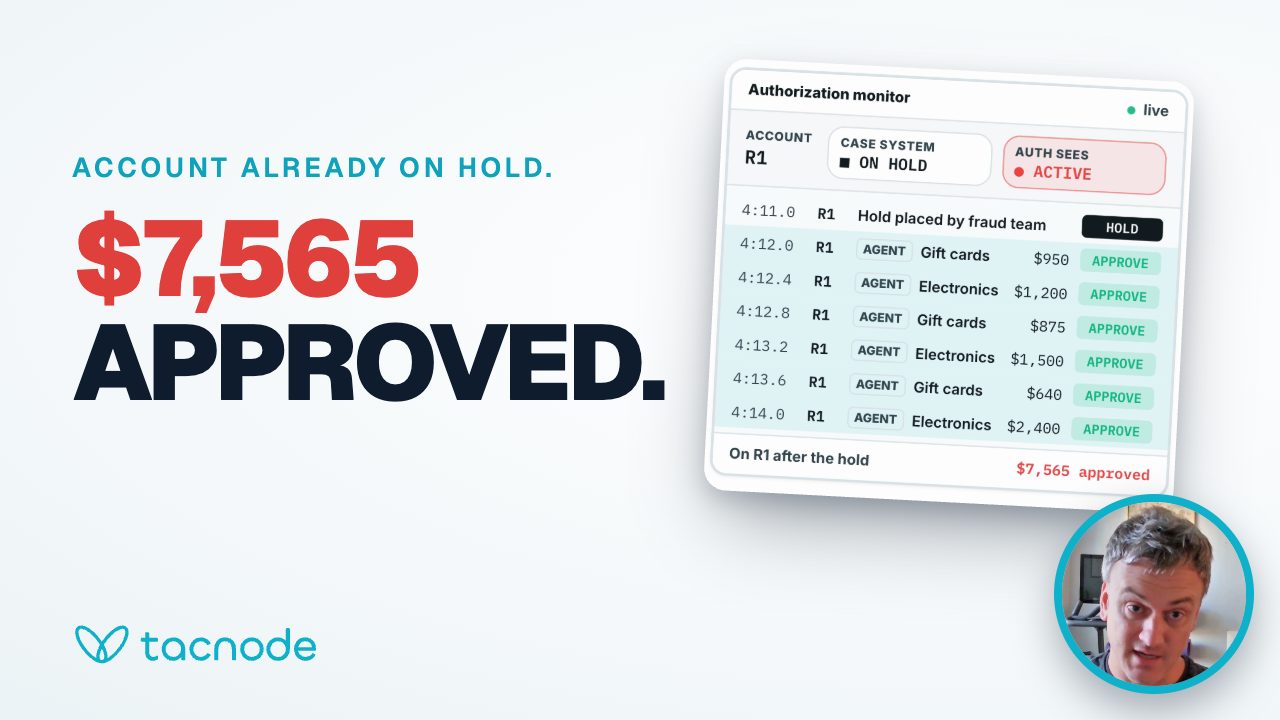
Card Fraud: Six Purchases Approved on an Account Already on Hold
A 4-minute walkthrough of a fraud hold placed in time that reaches card authorization eight seconds late, and the same hold with current context.
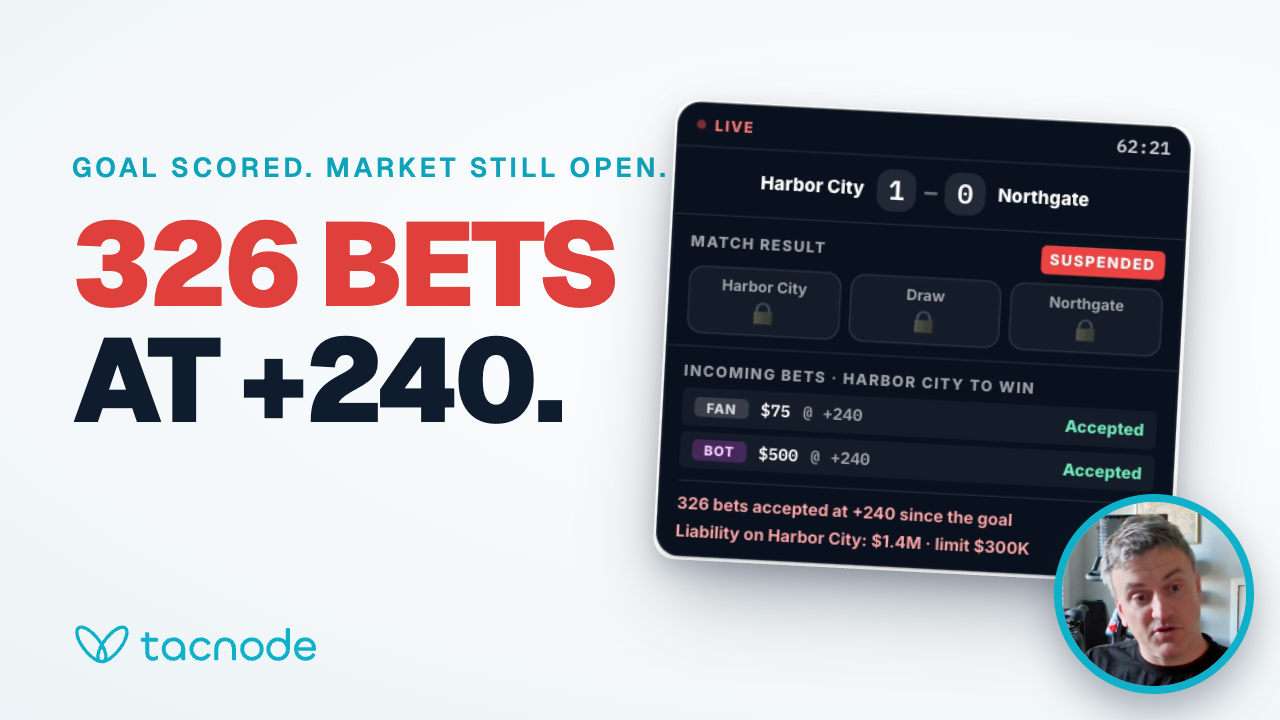
Past-Posting in Live Betting: Why Sportsbooks Keep Taking Bets After a Goal
A 4-minute walkthrough of a sportsbook that keeps taking bets for seven seconds after a goal, and the same goal with current context.
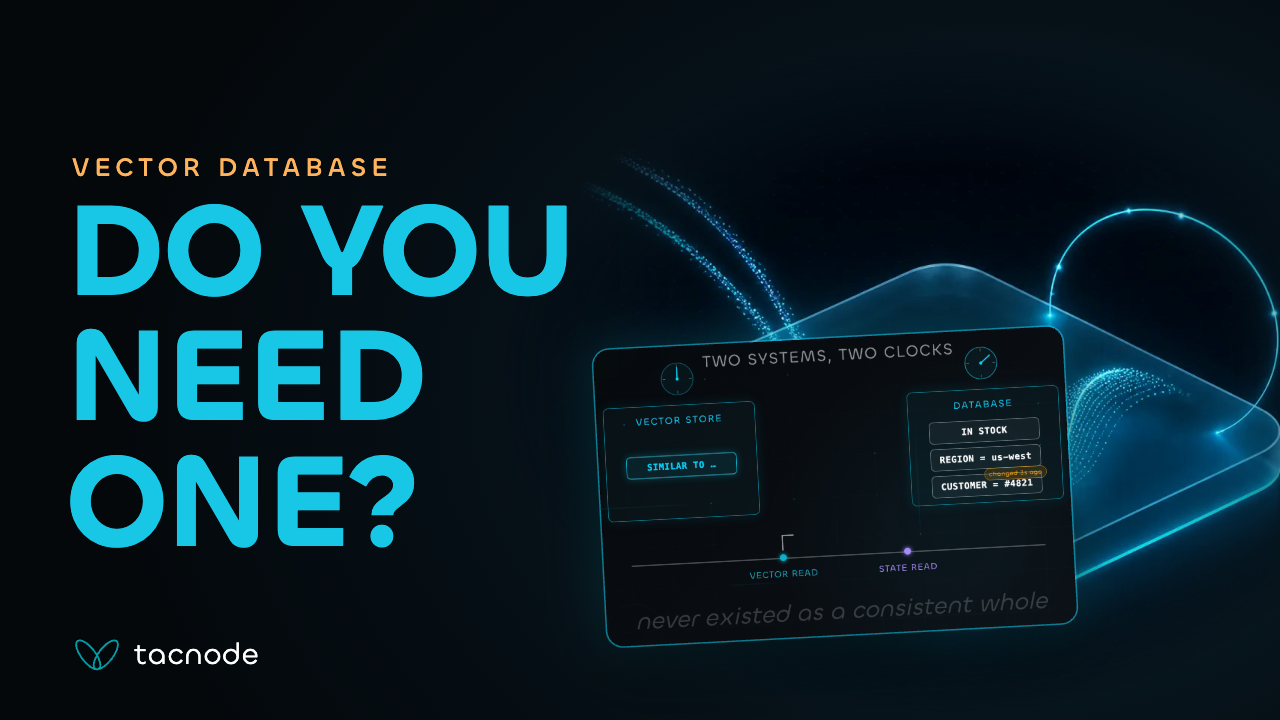
Do You Actually Need a Separate Vector Database?
A 3-minute explainer on when a separate vector database earns its place, and what changes when similarity search has to agree with live filters and state.
Ready to get started?
Book a demo to see how Tacnode can power your real-time data infrastructure.