Back to Blog
Real-Time Data Engineering

Data Freshness vs Data Latency: What's the Difference?

Your system responds in milliseconds — but are those milliseconds returning the truth? Learn why fast queries on stale data are worse than slow queries on fresh data.

Alex Kimball
Marketing
10 min read
Share:
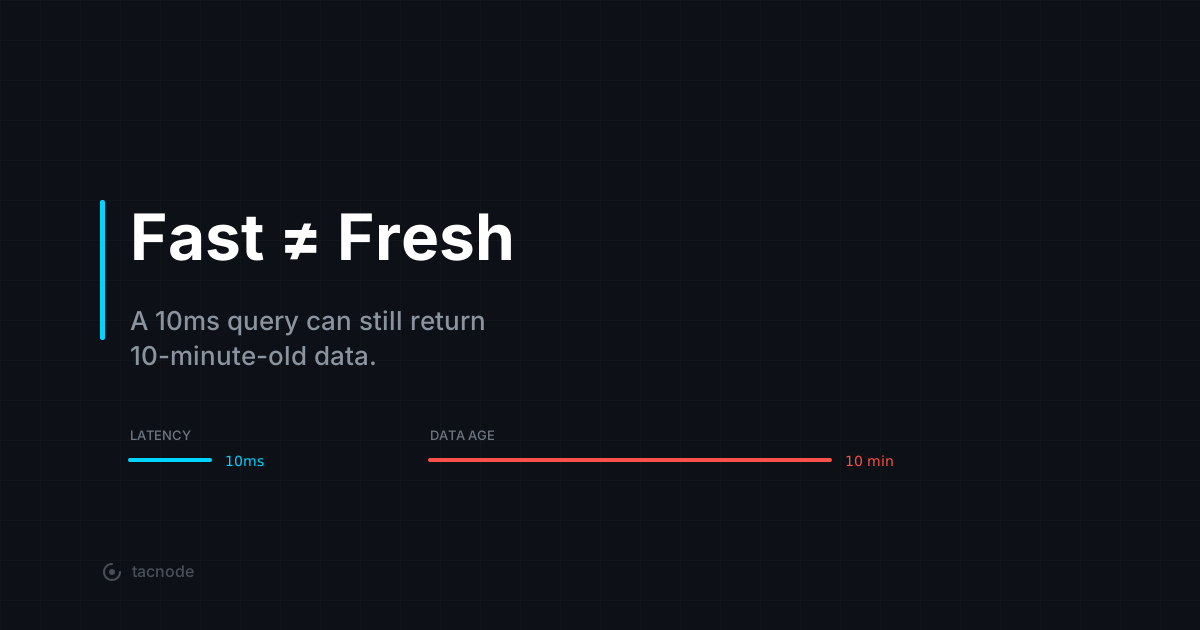
Diagram comparing data freshness and data latency concepts showing the difference between query speed and data currency

Data engineering teams spend enormous effort reducing latency. Dashboards track P99 response times. SLAs specify millisecond thresholds. Teams celebrate when a query drops from 50ms to 20ms.

But there's a question that often goes unasked: how old is the data being returned?

A system that answers in 10ms but returns outdated data from 10 minutes ago isn't fast — it's fast at being wrong. This is the distinction between data latency and [data freshness](/data-freshness), and confusing the two leads to decision making processes that feel responsive while quietly acting on outdated information.

Understanding why data freshness matters — and how it differs from latency — is essential for data teams building real-time systems.

What Is Data Freshness?

Data freshness refers to how current your data is at the moment of use. It measures the gap between when an event occurs in the real world and when that event becomes available in your system for decision making.

If a transaction happens at noon and your data warehouse reflects it at 12:05, your data freshness is five minutes. That data age may seem trivial, but in many operational systems it's the difference between a correct decision and potentially costly consequences.

Fresh data enables organizations to act on up to date information rather than stale snapshots. Maintaining data freshness is critical for machine learning models, real-time analytics, and any system where data timeliness affects outcomes.

What Is Data Latency?

Data latency measures the time between a request and its response. When you query a database and it returns in 15ms, that's your latency. It's visible, measurable, and easy to optimize.

The confusion arises because both data freshness and data latency involve time. But they measure fundamentally different things: latency measures system speed, while freshness measures data currency — whether the data reflects the present moment or contains outdated data.

Data Freshness vs Latency: Key Differences

DimensionData LatencyData Freshness
What it measuresTime for a query to return a responseData age when the system acts on it
Where it's visibleAPM dashboards, P99 charts, load testsRequires freshness monitoring and data observability tools
What improves itCaching, indexing, faster hardwareStreaming data pipelines, reduced hops, event driven architectures
Failure modeSlow responses, timeouts, degraded UXStale data that looks correct but causes missed opportunities
Who notices firstUsers and engineers (immediately)Business stakeholders (after potentially costly consequences)

Why Data Freshness Matters: The Dangerous Quadrant

Consider four possible states for your data systems:

  • Fast + Fresh: The ideal. Low latency, up to date data. Informed decisions are both quick and correct.
  • Slow + Fresh: Annoying but safe. Users wait, but they get relevant data.
  • Slow + Stale: Obviously broken. Everything is slow and wrong. Data teams fix this immediately.
  • Fast + Stale: The dangerous quadrant. The system feels responsive. Data refreshes appear healthy. But every answer contains outdated information.

Fast + Stale is dangerous precisely because it doesn't look broken. There are no timeouts, no errors, no alerts. The system appears healthy while systematically producing incorrect decision making processes based on stale data.

This is why data freshness is important as a first-class metric — not an afterthought behind latency optimization.

How Caching Affects Data Freshness

Caching is the most common latency optimization in data pipelines. It's also the most common freshness killer.

A cache hit returns data instantly — but that data might reflect data age of minutes or hours. Every caching layer you add improves latency metrics while silently degrading data freshness. Your data sources may be fresh, but by the time data is available to consumers, it's already outdated data.

This isn't an argument against caching. It's an argument for understanding the tradeoff. When you add a cache, ask: what's the maximum acceptable data age for this use case? If the answer is 'it depends on business needs,' you've found a freshness threshold hiding in plain sight.

Best practices include setting explicit freshness thresholds and implementing data freshness checks at each layer of your data processing pipeline.

Measuring Data Freshness: Key Metrics

Ensuring data freshness requires tracking event time (when something happened in the real world) alongside processing time (when your system became aware of it).

Data freshness metrics to track include:

  • Data age: The difference between current time and the timestamp of the most recent data point. This is the simplest freshness metric, though it doesn't tell you about the path data took through your data pipelines.
  • End-to-end freshness: The lag between when an event occurs and when that data is available at the decision point. This is what actually matters for data accuracy.
  • Freshness SLA adherence: What percentage of queries return data within your acceptable freshness thresholds? This turns freshness into an SLI you can alert on.
  • Data decay rate: How quickly does your data become stale? Some data sources update continuously; others have natural collection frequency timestamps that create inherent delays.

For data engineering teams, freshness monitoring should be as routine as latency monitoring. Data observability platforms can help track these data freshness metrics across your entire pipeline.

Real World Examples: Where Stale Data Causes Problems

E-commerce inventory: Your data warehouse shows 50 units available, but 48 were just sold through another channel. Stale data leads to overselling and customer disappointment.

Fraud detection: A machine learning model approves a transaction because the risk signal hasn't propagated through data pipelines yet. Outdated data means fraud slips through.

Dynamic pricing: Pricing decisions based on yesterday's demand data leave revenue on the table. Fresh data enables organizations to capture up to date market conditions.

Customer personalization: Recommendations based on last week's behavior miss today's intent. To deliver exceptional customer experiences requires understanding customer preferences in the present moment.

These real world examples show why data freshness matters for business outcomes, not just technical metrics.

Why AI and Machine Learning Amplify Freshness Issues

Traditional systems could tolerate some stale data because humans were in the loop. An analyst might notice that numbers don't add up. A user might refresh the page.

AI systems don't have this backstop. A machine learning model acts on whatever data is available, immediately and at scale. When raw data flowing into a model is stale, the model makes informed decisions based on outdated information — confidently, silently, repeatedly.

AI agents are especially vulnerable. They operate in tight loops: observe, decide, act, repeat. When the observation contains outdated data, the decision is wrong, and the action compounds the error. The agent doesn't know to wait for fresher data — it just acts on what it has.

Low latency without data freshness creates AI systems that process data quickly but produce inaccurate predictions.

Best Practices for Ensuring Data Freshness

Data engineering teams should take a proactive approach to maintaining data freshness:

Reduce pipeline hops. Every stage in your data pipelines — message queue, staging layer, transformation job, cache — adds both latency and data age. The freshest architectures minimize the distance between data sources and the final destination.

Evaluate streaming vs batch. Batch data processing is inherently stale by design. If your decision making processes require sub-minute freshness, batch pipelines can't deliver it regardless of optimization.

Implement freshness monitoring. Track data freshness metrics alongside latency. Alert when data age exceeds freshness thresholds. Make data observability a priority.

Consider event driven architectures. Event driven systems process data as events occur, maintaining data freshness by design rather than as an afterthought.

Set explicit freshness SLAs. Every data asset should have a defined freshness threshold based on business needs. Data teams should monitor adherence and treat freshness violations as incidents.

Data Freshness in Modern Data Architecture

Traditional architectures separate OLTP, OLAP, and streaming into different systems. Each boundary creates delays where new data becomes stale data before it reaches its final destination.

Modern approaches unify data processing to keep information fresh at the point of decision. Whether you're building a data warehouse, a streaming pipeline, or a unified context layer, the goal is the same: ensure data freshness by minimizing the gap between data collection and data availability.

The competitive edge goes to organizations that can act on up to date data while competitors are still waiting for their batch jobs to complete.

Key Takeaways

Data freshness and data latency are both about time, but they measure different things. Latency tells you how fast your system responds. Freshness tells you whether the response contains up to date information or outdated data.

The most dangerous failure mode is fast + stale: systems that feel responsive while returning stale data. These freshness issues are invisible to standard monitoring because there are no errors to catch.

For operational systems — especially machine learning models that act autonomously — data freshness matters more than latency. A slow answer with accurate predictions beats a fast answer based on outdated information.

To ensure data freshness, you need to measure it explicitly with data freshness metrics, set freshness thresholds based on business context, and evaluate architectural decisions through the lens of data timeliness. Until then, you're optimizing for speed without knowing if you're delivering relevant data.

Fresh data enables organizations to make informed decisions. Stale data, no matter how quickly it's served, leads to missed opportunities and potentially costly consequences.

Data FreshnessData LatencyReal-TimeData EngineeringData Quality
T

Written by Alex Kimball

Building the infrastructure layer for AI-native applications. We write about Decision Coherence, Tacnode Context Lake, and the future of data systems.

View all posts

Ready to see Tacnode Context Lake in action?

Book a demo and discover how Tacnode can power your AI-native applications.

Book a Demo